Tinnitus — the perception of ringing, buzzing, or whistling with no external sound source — affects a large share of adults at some point, and for many it becomes a daily source of frustration, disrupted sleep, and difficulty concentrating.
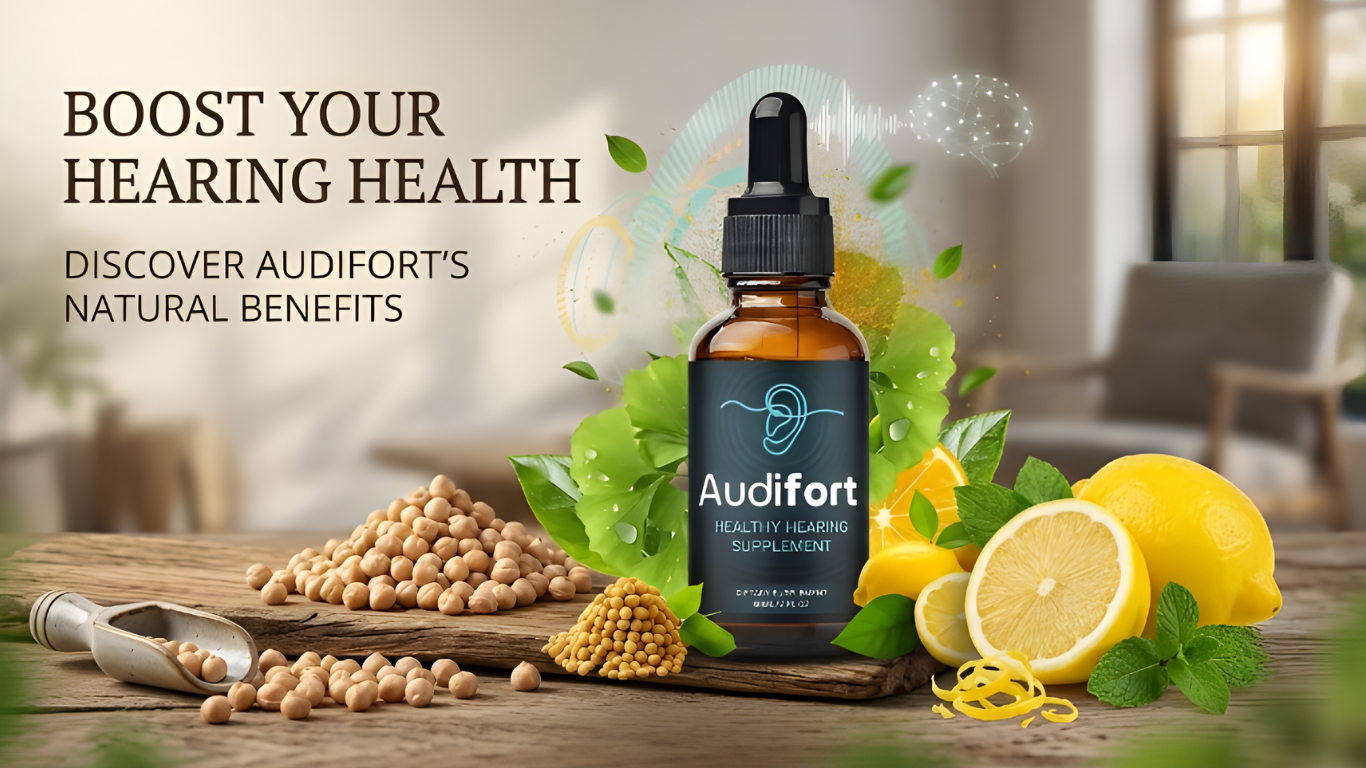
It’s no surprise that a steady stream of supplements market themselves as solutions, and Audifort is one of the newer entrants in this category: a liquid drop formula positioned around “auditory nerve support” and daily ear wellness.
This review is based on publicly available product information about Audifort — its stated ingredients, dosage, pricing, and refund policy — cross-checked against the actual clinical research on those ingredients.
We have not been given, and have not independently verified, any customer satisfaction data, review-platform ratings, or testimonials for this product, so none of that appears here.
What you’ll find instead is a straightforward look at what’s known, what’s marketing language, and what a reasonable person should check before buying.
Audifort at a Glance
| Specification | Details |
|---|---|
| Product Name | Audifort |
| Category | Dietary supplement (liquid drops) |
| Marketed For | Ear comfort, auditory nerve support, routine wellness (marketing claims, not independently verified) |
| Key Ingredients | Ginkgo Biloba, Zinc, Magnesium, Vitamin B12, NAC, Grape Seed Extract |
| Form / Dosage | Sublingual liquid, 4–5 drops daily |
| Manufacturer | Audifort Labs, USA |
| Price | Varies by package (see pricing table below) |
| Official Site | [OFFICIAL WEBSITE — insert verified link] |
What Is Audifort?
Audifort is marketed as a liquid nutraceutical designed to be taken sublingually (under the tongue) rather than swallowed as a capsule.
Its pitch centers on a blend of six ingredients — some botanical, some standard vitamins and minerals — combined into a single daily-drop formula.
The manufacturer’s language leans on phrases like “auditory nerve wellness” and “tinnitus relief,” which sound clinical but function as marketing claims rather than regulated medical claims (marketing claim, not independently verified).
Under U.S. law, dietary supplements are not permitted to claim they diagnose, treat, cure, or prevent a disease — tinnitus included — which is why you’ll typically see softer language like “supports” or “promotes” rather than “treats” or “cures” on the actual label.
It’s worth reading the product’s own label copy closely rather than relying on third-party review sites, since review-site language sometimes drifts further toward treatment claims than the manufacturer’s own packaging does.
Understanding Tinnitus: Why There’s No Simple Fix
Before evaluating any tinnitus-adjacent product, it helps to understand why the condition resists easy solutions. Tinnitus isn’t a single disease — it’s a symptom with a long list of possible underlying causes, including:
- Age-related hearing loss (presbycusis)
- Noise-induced damage to inner-ear hair cells
- Earwax blockage or middle-ear issues
- Certain medications (ototoxic drugs)
- Cardiovascular conditions affecting blood flow to the ear
- Jaw (TMJ) disorders
- In rare cases, tumors or structural abnormalities
Because the causes vary so widely, no single supplement ingredient is likely to work the same way for everyone experiencing it.
This is also why credible hearing-health organizations generally recommend seeing an audiologist or ENT for a proper diagnosis before spending money on any over-the-counter product — identifying the underlying cause matters more than the specific supplement chosen.
Key Features (As Marketed)
- Liquid sublingual format — no pills to swallow
- Blend of six named active ingredients
- Positioned for ongoing daily use rather than one-time treatment
- Manufactured in the USA
- Stated 60-day refund window
How to Evaluate Any Hearing-Health Supplement (Not Just This One)
Rather than accepting an unsourced star rating, here’s a practical framework for judging a product like Audifort — or any competitor — for yourself:
1. Is there a clinical trial on the finished product, not just its ingredients?
Individual ingredients (like ginkgo or zinc) may have research behind them in isolation, but that doesn’t mean a specific proprietary blend at undisclosed doses has been tested. For Audifort, we found no published clinical trial on the finished formula itself.
2. Are exact ingredient doses disclosed?
Publicly available Audifort information lists ingredients but not per-ingredient milligram amounts. Without exact doses, it’s impossible to compare the product against the doses actually used in the research studies discussed below.
3. Does the marketing use disease-treatment language?
Watch for the difference between “supports circulation” (a structure/function claim, allowed) and “relieves tinnitus” or “reverses hearing loss” (disease-treatment claims, which supplements legally cannot make). The closer the language gets to the latter, the more skeptical you should be.
4. Is there a required FDA disclaimer?
Legitimate supplement labels include the standard disclosure that the FDA hasn’t evaluated the product’s claims and that it isn’t intended to diagnose, treat, cure, or prevent any disease. Its presence doesn’t validate the product, but its absence is a red flag.
5. What does independent research say about each ingredient specifically for hearing or tinnitus — not just general health? This is where most of the real due diligence happens, and it’s covered in detail below.
Is Audifort Legitimate?
Based on the available information, there’s no indication that Audifort is an outright scam in the sense of taking payment and delivering nothing — it’s a real, purchasable product from a named manufacturer, with disclosed ingredients and a stated refund policy.
That’s a different question, though, from whether it’s clinically effective for tinnitus or hearing support specifically.
The honest answer sits in between the two extremes review sites often push: it’s a legitimate business selling a real product, built from ingredients that have some general research behind them, but there is no independent, peer-reviewed clinical trial demonstrating that the combined Audifort formula improves tinnitus, hearing clarity, or auditory nerve function.
Anyone marketing it — or reviewing it — as a proven hearing fix is overstating the evidence.
Pros and Cons
Pros
- Ingredient list is disclosed upfront on the label
- Sublingual liquid format may suit people who dislike swallowing capsules
- Stated 60-day money-back window
- Manufactured in the USA per company claims
Cons
- No independent clinical trial on the finished formula
- Exact per-ingredient dosages aren’t publicly disclosed
- “Tinnitus relief” framing in marketing outpaces the underlying evidence
- Multi-bottle pricing structure makes single-bottle purchases comparatively expensive
- No independently verifiable customer satisfaction data available
- Ginkgo biloba (a core ingredient) has been specifically studied for tinnitus and found ineffective in high-quality trials (see below)
Pricing (As Listed by the Seller)
| Package | Bottles | Total Price | Cost per Bottle |
|---|---|---|---|
| Smaller package | 2 | $158 | $79 |
| Mid package | 3 | $207 | $69 |
| Bulk package | 6 | $294 | $49 |
Pricing tiers on supplement sites change frequently and often include limited-time “discounts” that are, in practice, the standard ongoing price.
Confirm current pricing directly on the official checkout page before buying, and be wary of any countdown timer or “X bottles left” messaging — these are common urgency tactics in this product category and aren’t necessarily accurate reflections of real inventory or time-limited pricing.
Where to Buy — and How to Avoid Counterfeits
As with most direct-to-consumer supplement brands, buying through the official manufacturer site is generally the safer route compared to third-party marketplaces, where counterfeit or reformulated products can appear under the same branding.
Before entering payment details, check that:
- The URL matches the manufacturer’s actual domain (not a lookalike domain with a slight misspelling)
- The checkout page uses HTTPS encryption
- The listed ingredients match what’s described on the manufacturer’s own product page
- Any “official retailer” claims on third-party sites can actually be verified
How Audifort Claims to Work
The manufacturer’s positioning rests heavily on the sublingual delivery method — placing drops under the tongue rather than swallowing a capsule.
Sublingual absorption is a legitimate pharmacological concept: the tissue under the tongue is thin and rich in blood vessels, allowing some compounds to enter the bloodstream directly and bypass first-pass liver metabolism. This is well established for certain drugs (like nitroglycerin or some hormone formulations).
However, sublingual absorption efficiency varies enormously by compound — molecule size, fat solubility, and chemical stability under the tongue all matter.
There’s no published data specific to the Audifort formula showing what percentage of its ingredients are actually absorbed sublingually versus simply swallowed with the saliva (which then goes through normal digestion anyway).
In practice, much of a “sublingual” liquid ends up swallowed within the 30-second hold time regardless.
Beyond delivery method, the manufacturer’s claims about supporting “inner ear blood flow” and “nerve protection” are consistent with the general, textbook biological roles of ingredients like ginkgo biloba and B-vitamins — but general biological plausibility is not the same as demonstrated clinical benefit for tinnitus or hearing, which is a distinction worth holding onto through the ingredient breakdown below.
Ingredients and What the Research Actually Says
This is the section worth reading most carefully, because it’s where marketing claims and clinical evidence most often diverge.
Ginkgo Biloba Extract
Ginkgo is the most heavily studied ingredient in this formula specifically for tinnitus — and the results are not favorable to the marketing claims.
A Cochrane systematic review (the gold standard for evaluating clinical evidence) examined four high-quality trials involving 1,543 participants with tinnitus as their primary complaint.
The review found no evidence that ginkgo biloba was effective for tinnitus when it was the primary complaint and rated the included trials as low risk of bias.
A more recent, larger Cochrane update expanded the review to twelve studies covering 1,915 participants, reinforcing the same general conclusion.
Ginkgo does have research support in other areas (like general circulation), but for tinnitus specifically, the highest-quality evidence available says it doesn’t outperform placebo. cochranecochrane.
Zinc
Zinc is often included in ear-health formulas because the cochlea contains notably high concentrations of zinc, and zinc deficiency has been associated with hearing loss and tinnitus in older adults.
That’s a real physiological connection — but it only matters if you’re actually deficient.
A Cochrane review of oral zinc supplementation for tinnitus concluded that the quality of evidence was very low and found no evidence that oral zinc supplementation improves tinnitus symptoms.
A hearing-health specialist interviewed on the topic put it plainly: there’s no high-quality evidence that zinc has a direct positive effect on tinnitus, particularly in people without a diagnosed zinc deficiency.
In short — if you’re zinc-deficient, correcting that may help general health; if you’re not, taking extra zinc for tinnitus specifically has no solid evidence behind it. Tinnitus is on the rise and some patients are turning to zinc supplements for relief +2.
Magnesium
Magnesium plays an established, textbook role in normal nerve signaling and muscle function throughout the body, and some researchers have theorized it may help protect against noise-induced auditory damage by supporting healthy blood flow and nerve conduction in the cochlea.
However, this is more of a plausible mechanism than a demonstrated clinical outcome for existing tinnitus — most of the stronger magnesium research is in the context of prevention of noise-induced hearing damage in occupational settings, not reversal of tinnitus that’s already present.
Vitamin B12
B12 deficiency has been associated with tinnitus and other nerve-related symptoms in some observational studies, which is the rationale for including it here.
As with zinc, though, the practical takeaway is that correcting a genuine B12 deficiency may help if that deficiency exists — B12 is water-soluble and well tolerated, so there’s little downside to supplementing it, but there’s no strong evidence that extra B12 helps someone who isn’t deficient.
N-Acetyl Cysteine (NAC)
NAC is an antioxidant precursor, and there is a reasonable body of research on antioxidants (including NAC) for preventing noise-induced hearing damage — for example, in military or industrial settings where NAC has been studied as a protective measure taken around known loud-noise exposure.
That’s a meaningfully different use case from taking NAC daily to relieve tinnitus that’s already established, which has much thinner supporting evidence.
Grape Seed Extract
Grape seed extract is a polyphenol-rich antioxidant most commonly studied for cardiovascular and circulatory support.
Its inclusion here follows the same general “supports blood flow to the ear” logic as ginkgo, but there’s little to no direct research on grape seed extract specifically for tinnitus or auditory function.
The bottom line on ingredients: every ingredient in this formula has some legitimate research behind it in a general health context, and a couple (zinc, B12) have plausible ear-health relevance if a person is actually deficient.
But the ingredient most directly and rigorously studied for tinnitus specifically — ginkgo biloba — has been tested in high-quality trials and found not to outperform placebo.
That’s an important gap between the formula’s positioning and what the underlying science shows.
Possible Benefits (Realistically Framed)
- May contribute to general antioxidant intake as part of an overall diet
- May help correct an underlying zinc or B12 deficiency, if one exists (best confirmed via bloodwork, not guesswork)
- A convenient format for people who specifically dislike swallowing capsules
- No component here is inherently dangerous at typical supplement doses for most healthy adults
Safety Considerations and Drug Interactions
- Ginkgo biloba has documented interactions with blood-thinning medications (warfarin, aspirin, clopidogrel) and may increase bleeding risk; it’s also generally advised against before surgery.
- Zinc, taken long-term at high doses, can interfere with copper absorption and, in some cases, affect immune function paradoxically.
- NAC is generally well tolerated but can cause mild nausea or GI upset in some people.
- Magnesium in high doses can cause diarrhea and, in people with kidney impairment, can accumulate to harmful levels.
- Vitamin B12 has a wide safety margin as a water-soluble vitamin, with few reported adverse effects even at higher doses.
Anyone who is pregnant, nursing, taking prescription medication (blood thinners especially), or managing an existing health condition should talk to a doctor or pharmacist before starting this or any new supplement combination — this applies generally to this ingredient mix, not to Audifort specifically.
How to Use
Per the manufacturer’s stated directions: place 4–5 drops under the tongue and hold for about 30 seconds before swallowing, or mix into a small amount of water if preferred.
As always, follow the actual label directions on the bottle you receive, since formulations and dosing guidance can be updated over time.
Refund Policy
The manufacturer states a 60-day money-back guarantee.
As with any online supplement purchase, save your order confirmation email immediately, note the refund window’s exact end date, and review the current policy terms on the official site before buying, since terms can change without much notice.
Alternative and Complementary Approaches Worth Knowing About
Since the evidence for supplement-based tinnitus relief is generally weak across the category — not just for this product — it’s worth knowing what approaches actually have stronger clinical support, so you can weigh them against a supplement purchase:
- Audiologist evaluation: Identifying the underlying cause (hearing loss, earwax, medication side effect, etc.) is the recommended first step by hearing-health professionals, and it’s something no supplement can substitute for.
- Cognitive Behavioral Therapy (CBT): Has some of the stronger evidence in tinnitus management — not for eliminating the sound itself, but for reducing the distress and disruption it causes.
- Sound therapy / tinnitus maskers: Devices that introduce background noise to make tinnitus less noticeable, often used alongside hearing aids for people with concurrent hearing loss.
- Hearing aids: For people with both hearing loss and tinnitus, properly fitted hearing aids often reduce the perceived prominence of tinnitus as a secondary effect.
- Addressing correctable causes: Earwax removal, reviewing ototoxic medications with a doctor, and managing cardiovascular risk factors can all meaningfully help in specific cases.
None of this means supplements are useless as a general wellness habit — it just means they shouldn’t be the first or only strategy for someone whose tinnitus is significantly affecting their life.
Who Might Consider It vs. Who Should Avoid It
| Might Consider | Should Avoid / Consult a Doctor First |
|---|---|
| Adults looking for a general daily nutrient supplement in liquid form | Anyone expecting a clinically proven tinnitus treatment |
| People who prefer sublingual drops over swallowing pills | Anyone taking blood-thinning medication (due to ginkgo) |
| Those comfortable trying an ingredient-based wellness product with modest evidence | Pregnant or nursing individuals without medical clearance |
| People who have already ruled out a diagnosable, treatable cause of their tinnitus | Anyone under 18 |
Bottom Line
Audifort is a real, purchasable supplement with a disclosed ingredient list and a stated 60-day refund window — there’s no evidence here that it’s a scam in the sense of being fraudulent or nonexistent.
But its marketing language around “tinnitus relief” and “auditory nerve wellness” runs well ahead of the clinical evidence, particularly for its flagship ingredient, ginkgo biloba, which high-quality Cochrane-reviewed trials have specifically found ineffective for tinnitus as a primary complaint.
Zinc shows a similar pattern: plausible in theory, unsupported by trial evidence except in cases of diagnosed deficiency.
If you’re dealing with tinnitus or hearing changes, the most evidence-backed first step is an audiologist evaluation to identify the underlying cause — a supplement, this one or any competitor, is reasonable at most as an adjunct to general wellness, not a substitute for that.
Frequently Asked Questions
How long until Audifort shows results?
The manufacturer doesn’t publish a clinically verified timeline. General nutrient supplementation is often described as needing several weeks of consistent use to assess any effect, but this isn’t specific clinical evidence for this product.
Is Audifort FDA-approved?
No dietary supplement is “FDA-approved” the way a prescription drug is. It may be made in an FDA-registered, GMP-certified facility, which relates to manufacturing quality standards, not to whether its health claims have been evaluated or proven.
Can Audifort cure tinnitus?
No — no supplement, including this one, has independently verified clinical evidence that it cures tinnitus. Tinnitus has many possible underlying causes and should be evaluated by a doctor or audiologist rather than treated with any single product.
Is ginkgo biloba actually proven to help tinnitus?
No. A Cochrane systematic review of high-quality trials specifically found no evidence that ginkgo biloba is effective for tinnitus when it’s the primary complaint, despite it being one of the most commonly marketed “natural” tinnitus ingredients.
Should I take zinc for my tinnitus?
Only if you have a confirmed zinc deficiency, ideally verified through bloodwork. Cochrane review data found no evidence that zinc supplementation improves tinnitus symptoms in the general population.
Is Audifort safe to take with medication?
Ginkgo biloba specifically can interact with blood-thinning medications and increase bleeding risk. Anyone on prescription medication, especially anticoagulants, should check with a doctor or pharmacist before use.
What’s the refund window?
The manufacturer states a 60-day guarantee; confirm the current terms directly on the official site before purchasing, since policies can be updated.
Where should I buy it to avoid counterfeits?
Buying directly through the manufacturer’s official website is generally the safer option for any supplement, since third-party marketplace listings carry a higher risk of counterfeit or altered products.
Does the sublingual liquid format actually work better than pills?
Sublingual absorption is a real phenomenon for some compounds, but there’s no published data on how much of Audifort’s specific ingredients are actually absorbed this way versus simply swallowed. The format is a matter of convenience preference more than a proven efficacy advantage for this specific formula.
Who shouldn’t take it?
Anyone under 18, pregnant or nursing without medical clearance, or on blood-thinning medication should consult a doctor first. Anyone with sudden or worsening hearing changes should see a doctor rather than trying a supplement first.
Are there better-supported ways to manage tinnitus?
Yes — an audiologist evaluation to identify the cause, cognitive behavioral therapy for tinnitus-related distress, sound therapy, and properly fitted hearing aids (where hearing loss is present) all have stronger clinical evidence than most tinnitus supplements currently on the market.